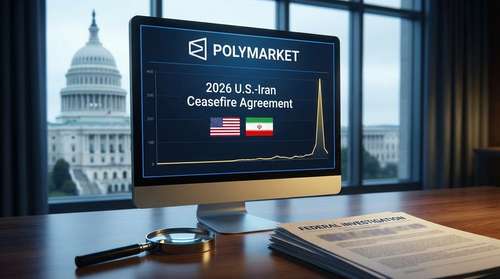
The rapidly expanding world of prediction markets is facing its most severe political crisis yet. A looming Polymarket investigation has sent shockwaves through the digital wagering industry following an unprecedented pattern of suspiciously well-timed wagers. U.S. lawmakers are now demanding a sweeping federal gambling probe after anonymous traders locked in massive profits by betting on a U.S.-Iran ceasefire mere minutes before the official announcement.
As prediction platforms increasingly blur the lines between sports betting, finance, and geopolitics, this Polymarket controversy is raising red flags about market integrity. What was once heralded as the ultimate tool for crowd-sourced forecasting is now being heavily scrutinized as a potential haven for coordinated prediction markets insider trading.
The US-Iran Ceasefire Betting Controversy
In early April 2026, President Donald Trump officially announced a monumental U.S.-Iran ceasefire. While the diplomatic breakthrough shocked the general public—especially given the administration's previously escalating rhetoric—a select group of digital bettors seemed to know exactly what was coming.
According to widespread reports, at least 50 newly created accounts on Polymarket placed highly specific, maximum-confidence wagers on the ceasefire outcome just minutes before the presidential announcement went live. These accounts had absolutely zero prior trading history on the platform. By the time the news broke, these anonymous traders had collectively generated hundreds of thousands of dollars in rapid-fire profits, executing trades that would be virtually impossible without prior knowledge.
Lawmakers Demand a Federal Gambling Probe
The brazen nature of the US-Iran ceasefire betting has drawn fierce bipartisan backlash on Capitol Hill. Representative Ritchie Torres (D-N.Y.), who serves on the House Financial Services Committee, formally requested that the Commodity Futures Trading Commission (CFTC) launch an immediate inquiry.
In a scathing letter to CFTC Chairman Michael Selig, Torres highlighted the utter statistical improbability of the trades. He pointedly noted that anyone accurately placing a winning bet 12 minutes prior to a market-moving presidential post was either relying on divine intervention or acting as an insider trader, quipping that "God is not placing bets around Donald Trump's posts on Truth Social". Torres is urging federal regulators to aggressively analyze wallet linkages and platform-level data to uncover the individuals behind the digital curtain.
A Threat to National Security?
This defining sports betting scandal 2026 extends far beyond mere financial fraud; lawmakers are framing it as a dire national security risk. Senator Richard Blumenthal (D-Conn.) issued a direct letter to Polymarket leadership, demanding an immediate explanation for their failure to police insider activity.
Blumenthal did not mince words, classifying the platform as an "illicit market to sell and exploit national security secrets". He further warned that decentralized betting exchanges could easily serve as a honeypot for foreign intelligence agencies looking to gauge or capitalize on classified American military strategies before they are made public.
A Growing Prediction Markets Insider Trading Epidemic
The ceasefire incident is merely the tip of the iceberg. A comprehensive study utilizing public blockchain data estimated that so-called "informed traders" netted a staggering $143 million in anomalous profits on Polymarket between 2024 and 2026. Researchers from prestigious institutions analyzed over 210,000 suspicious trades, painting a troubling picture of systemic exploitation.
The scope of this issue is vast, characterized by several glaring red flags:
- Suspicious Timing: Maximum-confidence bets placed minutes before global news breaks.
- Zero Account History: Newly minted wallets executing flawless trades and immediately cashing out.
- Uncanny Accuracy: Individual accounts predicting complex military and political outcomes with near-perfect precision.
This pattern of foresight is deeply entrenched. In January 2026, an anonymous user pocketed a $400,000 profit by betting on the removal of Venezuelan leader Nicolás Maduro just hours before his highly publicized capture. In another instance, an account turned an $87,000 position into over $550,000 by correctly predicting foreign military strikes.
The Future of Betting Market Regulations
As the Polymarket investigation gathers momentum, the entire digital forecasting industry faces an existential threat. Traditional sportsbooks have long dealt with integrity issues, but prediction markets introduce entirely new variables. In late March 2026, platforms scrambled to implement new technological guardrails to appease lawmakers. Polymarket explicitly updated its rulebook to ban trades based on "stolen confidential information" and restricted individuals from betting on events they could directly influence.
However, the sheer volume of suspicious US-Iran ceasefire betting just weeks later suggests these self-imposed regulations are falling critically short. This ongoing Polymarket controversy highlights a fundamental flaw in the system: while ordinary users are betting on probabilities, an elite few are cashing in on absolute certainties. With the CFTC tightening its grip and Congress actively drafting restrictive new legislation, the landscape of betting market regulations is poised for a drastic, industry-altering overhaul. If these decentralized platforms cannot independently protect retail investors and permanently weed out government insiders, federal regulators appear more than ready to step in, mandate strict compliance, and aggressively reshape the future of digital wagering.