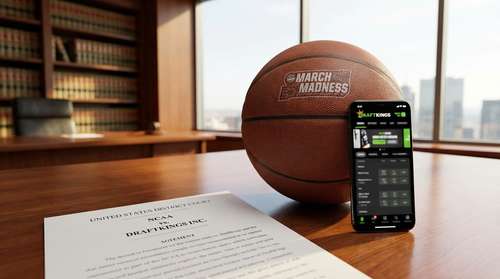
The peak of the college basketball season usually brings bracket debates and buzzer-beaters, but this year it has sparked a massive courtroom clash. On Friday, March 20, the National Collegiate Athletic Association dropped a legal hammer, initiating an NCAA lawsuit against DraftKings. Filed in the Southern District of Indiana, the federal complaint seeks an emergency temporary restraining order to stop the sportsbook from using heavily protected tournament phrases. As millions of fans lock in their wagers for the opening weekend, this aggressive legal maneuver highlights the ongoing friction between collegiate athletics and the booming sports wagering industry.
The Core of the NCAA vs DraftKings Legal Battle
At the center of this dispute are some of the most recognizable phrases in American sports. The NCAA holds federal trademarks for "March Madness," "Final Four," "Elite Eight," and "Sweet Sixteen". According to the complaint, DraftKings has prominently integrated these exact terms across its mobile app and desktop platform.
The lawsuit features dozens of screenshots showing the contested terms functioning as navigation tabs, parlay labels, and betting category headers. Specific examples cited in the filing include a "Final Four Round One" parlay label and survivor contests branded as "March Mania". The NCAA argues this goes beyond mere scheduling information, accusing the betting operator of embedding the marks into SEO metatags and promotional graphics to hijack the tournament's massive organic search traffic.
By allegedly usurping the association's goodwill, the NCAA claims DraftKings is committing DraftKings trademark infringement, false association, and dilution by tarnishment under the Lanham Act. The dilution claim specifically argues that linking the famous college marks to commercial gambling harms the NCAA's reputation—exactly the kind of unsavory association the statute was designed to prevent. The organization believes these actions deliberately confuse consumers into thinking the NCAA officially endorses or partners with the gambling platform.
Why the NCAA is Targeting March Madness Betting Trademarks
The timing of this lawsuit is no coincidence. The association is highly sensitive to the optics of sports betting, maintaining a strict internal prohibition against commercial partnerships with sportsbooks of any kind.
NCAA officials argue that the unauthorized use of their intellectual property threatens their core institutional values. They voiced specific concerns that young adults and college students—demographics highly susceptible to gambling harms—might view DraftKings' marketing and falsely assume the NCAA greenlit the betting platform. The organization has spent heavily on integrity monitoring and anti-harassment education, and they view this lawsuit as a crucial step to protect student-athlete well-being.
Recent Scandals Fuel the Fire
This hypersensitivity comes on the heels of several major gambling controversies that rocked college basketball. Just two months ago, in January 2026, a federal point-shaving case led to the indictment of 20 college basketball players across 17 schools. Add in the high-profile investigation involving unusual wagering on a UAB-Temple game that ultimately led to the dismissal of a prominent player from his new program, and it becomes perfectly clear why the NCAA wants absolute separation from betting operators.
DraftKings' Defense Against Trademark Infringement
DraftKings is not backing down. The Boston-based operator quickly responded to the allegations, signaling a robust defense centered on the First Amendment and nominative fair use doctrines. In trademark law, nominative fair use allows a party to use someone else's trademark to reference the actual good or service, provided it is necessary to identify it and does not imply endorsement.
In a public statement released Saturday, a company spokesperson denied that they are using the phrases as official branding tools. Instead, DraftKings insists they are utilizing the terms in "plain text" to accurately identify the specific tournaments and corresponding games for their users.
"This is protected speech under the First Amendment and is not a violation of any brand's trademark," the DraftKings representative stated, comparing their usage of "March Madness" to how they objectively list other collegiate basketball tournaments like the NIT. The company expressed supreme confidence that the federal court will ultimately deny the NCAA's request for an emergency injunction.
What This Means for College Basketball Betting News
For fans following NCAA tournament 2026 news, the immediate question is whether the betting experience will change. If the federal judge in Indianapolis grants the emergency restraining order, DraftKings would be forced to scrub all official NCAA branding from its menus immediately.
This could result in a "Big Game" scenario—similar to how companies navigate around the Super Bowl trademark—where sportsbooks are forced to use generic placeholders like "The Spring College Basketball Tournament" or "The Final Weekend".
As the briefing schedule kicks off on Monday, the sports betting world will be watching closely. The outcome of this case could establish a massive precedent regarding March Madness sports betting legality and how gambling operators market their products around trademarked collegiate events moving forward.