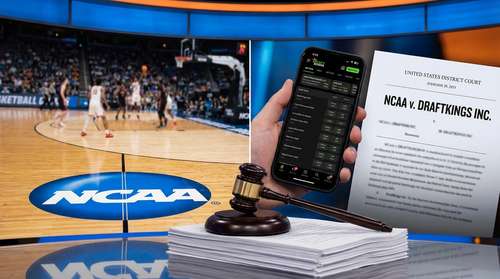
Just as the Round of 32 delivered its signature weekend upsets, a different kind of high-stakes clash unfolded off the hardwood. On Friday evening, March 20, 2026, collegiate athletics' governing body dropped a legal bombshell in the Southern District of Indiana. The highly anticipated NCAA vs DraftKings lawsuit alleges that the sports betting operator committed blatant trademark infringement by using officially registered terms like "March Madness" to promote its wagering platform. Occurring amid peak tournament fever, this aggressive legal maneuver puts a massive spotlight on the escalating friction between collegiate integrity and a booming $4 billion sports gambling industry.
The Core of the March Madness Trademark Dispute
The NCAA is urgently pursuing an emergency temporary restraining order to immediately halt DraftKings from utilizing its federally registered intellectual property. According to the federal complaint, the sportsbook's promotional materials, mobile app interfaces, and digital graphics improperly leverage iconic phrases—including "Sweet Sixteen," "Elite Eight," and "Final Four"—without any licensing agreement or permission. The lawsuit highlights screenshots from the DraftKings app as direct evidence of the proliferation of these marks.
The association argues this unauthorized usage deliberately confuses consumers. By seamlessly linking the tournament's famous branding with DraftKings NCAA tournament odds, the NCAA claims the sportsbook creates a false impression of an official partnership. The organization stated that the betting operator usurped the immense goodwill and recognition of these marks "at the precise moment of peak public attention."
This runs directly counter to the organization's aggressive stance against gambling affiliations, highlighting a fierce, ongoing battle over NCAA gambling intellectual property. In its filing, the NCAA explicitly expressed concern that millions of sports fans—particularly college students and young adults who are highly susceptible to gambling-related harms—might falsely believe the NCAA has authorized these betting markets.
DraftKings Fights Back: Fair Use and Free Speech
DraftKings is not backing down from the confrontation. In response to the emergency filing, the Boston-based sportsbook giant issued a forceful statement denying any trademark infringement, setting the stage for a fascinating legal showdown over sportsbook marketing laws.
The betting company argues that its platform uses the tournament names in "plain text" as a matter of fair use, simply to identify the events accurately for users navigating the app. DraftKings representatives compared their usage to how they list the NIT or other standard sporting events, claiming the nomenclature is entirely necessary to clearly display the matchups to bettors. Furthermore, the operator firmly asserted that their terminology constitutes protected speech under the First Amendment, adding that they are confident the courts will ultimately deny the injunction request.
Implications for Bookmakers Nationwide
If a federal judge sides with the NCAA and grants the restraining order, the immediate ripple effects will force sportsbooks to rapidly alter their digital storefronts in the middle of the tournament. Operators might have to scramble to adopt generic phrasing like "The Men's College Hoops Tournament" or "The Spring Bracket" to avoid similar litigation. This would drastically change how betting platforms communicate with their customers during the most lucrative wagering month on the sporting calendar.
Protecting Athletes in the Era of Legal Wagering
This courtroom battle represents the first formal legal action the NCAA has taken directly against a major prediction market or sportsbook operator over phrasing and event terminology. However, it marks just one part of a broader escalation in the ongoing tension surrounding college basketball betting regulations.
Over the past two years, NCAA President Charlie Baker has heavily lobbied state gaming commissions to ban proposition bets on individual college athletes. He has repeatedly cited mounting concerns over player harassment, toxic online abuse from disgruntled bettors, and the looming threat of game manipulation. Several recent point-shaving investigations and suspicious wagering alerts—such as the high-profile 2024 incident involving irregular spreads during a UAB versus Temple game—have only intensified the NCAA's desire to forcefully distance its brand from the betting market.
The association maintains that it refuses to have any commercial relationships with sportsbooks of any kind. Allowing a massive gambling entity to utilize its branding unchecked, the NCAA argues, directly undermines its robust educational and integrity-monitoring efforts designed to shield student-athletes.
A Defining Moment for Sports Betting Legal News 2026
Legal experts are watching the federal docket closely. As legal gambling continues its rapid expansion across North America, collegiate administrators are drawing a definitive line in the sand regarding their proprietary branding.
This is arguably the most consequential piece of sports betting legal news 2026 has delivered thus far. The outcome of this specific trademark dispute will likely establish a critical legal precedent for the entire industry. Whether the courts view the sportsbook's branding tactics as straightforward, nominative fair use or an illegal capitalization on collegiate goodwill, this landmark case will fundamentally reshape the advertising strategies, compliance protocols, and promotional language used by the entire sports wagering sector for years to come.