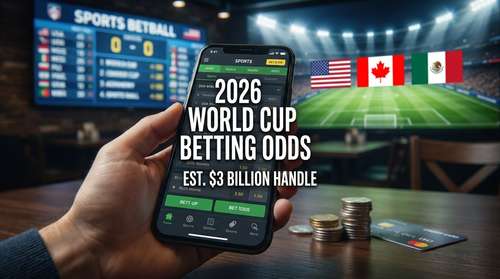
The sporting world turned its eyes to Estadio Azteca on June 11, 2026, as Mexico secured a 2-0 victory over South Africa to open the largest tournament in history. While the roar of the home crowd signaled the start of a massive soccer festival across North America, an equally historic frenzy was unfolding quietly on smartphones and betting terminals across the United States. Driven by an expanded 48-team format and 104 total matches, 2026 FIFA World Cup sports betting is projected to smash every existing financial benchmark, with industry analysts forecasting a total domestic handle exceeding $3 billion.
To put that astronomical figure into perspective, Super Bowl LX—played just four months ago in California—set a national record with an estimated $1.76 billion legally wagered. The sheer volume of this summer's tournament, stretching across 39 days, presents an unprecedented opportunity for oddsmakers. The sheer scale of the action is already reshaping how Americans wager on international soccer.
The Home-Soil Catalyst and Skyrocketing Engagement
A driving force behind this historic volume is the accessibility of prime-time match schedules. Because the United States is sharing hosting duties with Canada and Mexico, games are being played in familiar time zones, eliminating the awkward morning broadcasts that traditionally suppress domestic handle for overseas tournaments. This logistical advantage is supercharging the USMNT World Cup betting handle.
With the U.S. Men's National Team headlining Group D, casual fans are flooding legal sportsbooks. Operators are seizing the moment, rolling out aggressive marketing campaigns to capture new users. DraftKings World Cup promos have been highly visible since kickoff, offering everything from boosted parlays to bonus bets tailored specifically to American fixtures. This influx of recreational money adds massive liquidity to the market, shifting the balance away from sharp, professional syndicates and allowing books to generate higher revenue margins.
Evolving Wager Tactics
Inside the boardrooms of major operators, the data reflects a rapid evolution in consumer behavior. Early FanDuel soccer betting trends indicate a massive surge in micro-betting—wagers placed on next-minute events like corners, throw-ins, and yellow cards. Rather than merely picking a moneyline winner, bettors are utilizing same-game parlays to stay engaged for a full 90 minutes. With 104 individual matches available, this high-frequency wagering model provides sportsbooks with a continuous, daily stream of revenue that the NFL's single-game championship simply cannot replicate.
A Shifting Landscape: The Trading Floor Takes Over
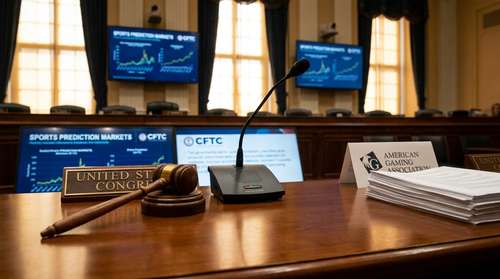
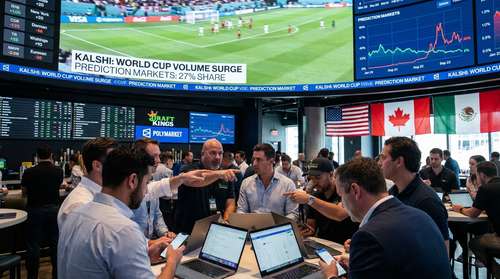
While traditional sportsbooks are enjoying record-breaking volume, they are simultaneously fighting off aggressive new competitors. The most significant disruption this summer comes from platforms that treat sports like financial equities. World Cup prediction markets Polymarket and Kalshi have emerged as dominant forces, fundamentally altering how sophisticated bettors find value.
Unlike standard oddsmakers that lock in your wager against the house, prediction markets allow users to buy and sell shares of an outcome in real-time. Just one day into the tournament, Polymarket has already approached an astonishing $2 billion in trading volume for its World Cup outright winner market alone. Favorites like Spain and France are heavily traded commodities, with their implied probabilities fluctuating wildly after every major development, injury report, or group stage result. This dynamic environment means that World Cup 2026 betting odds are no longer static numbers; they are fluid assets constantly reacting to global sentiment.
Rewriting the Record Books
Super Bowl LX served as a massive stress test for the American betting infrastructure. DraftKings alone reported carrying over $8 billion in potential payouts tied to that single game in February. Now, operators must sustain that level of technical performance and risk management for an entire month.
The $3 billion projection might even end up being conservative. As the tournament progresses from the frantic group stages into the high-stakes drama of the elimination rounds in July, the public's appetite for action will only intensify. The 2026 World Cup is not merely an international athletic competition; it is the absolute peak of the legalized sports betting era in the United States, transforming a month of soccer into the most lucrative summer the industry has ever seen.